o rings the small seals that keep the world running
O-Rings: The Small Seals That Keep the World Running
Published: 17 November 2025
Read Time: 2.39 mins
When it comes to engineering and manufacturing, some of the most critical components are also the smallest. Among these unsung heroes is the O-ring - a simple circular seal that prevents leaks, maintains pressure, and keeps countless machines operating smoothly.
What Is an O-Ring?
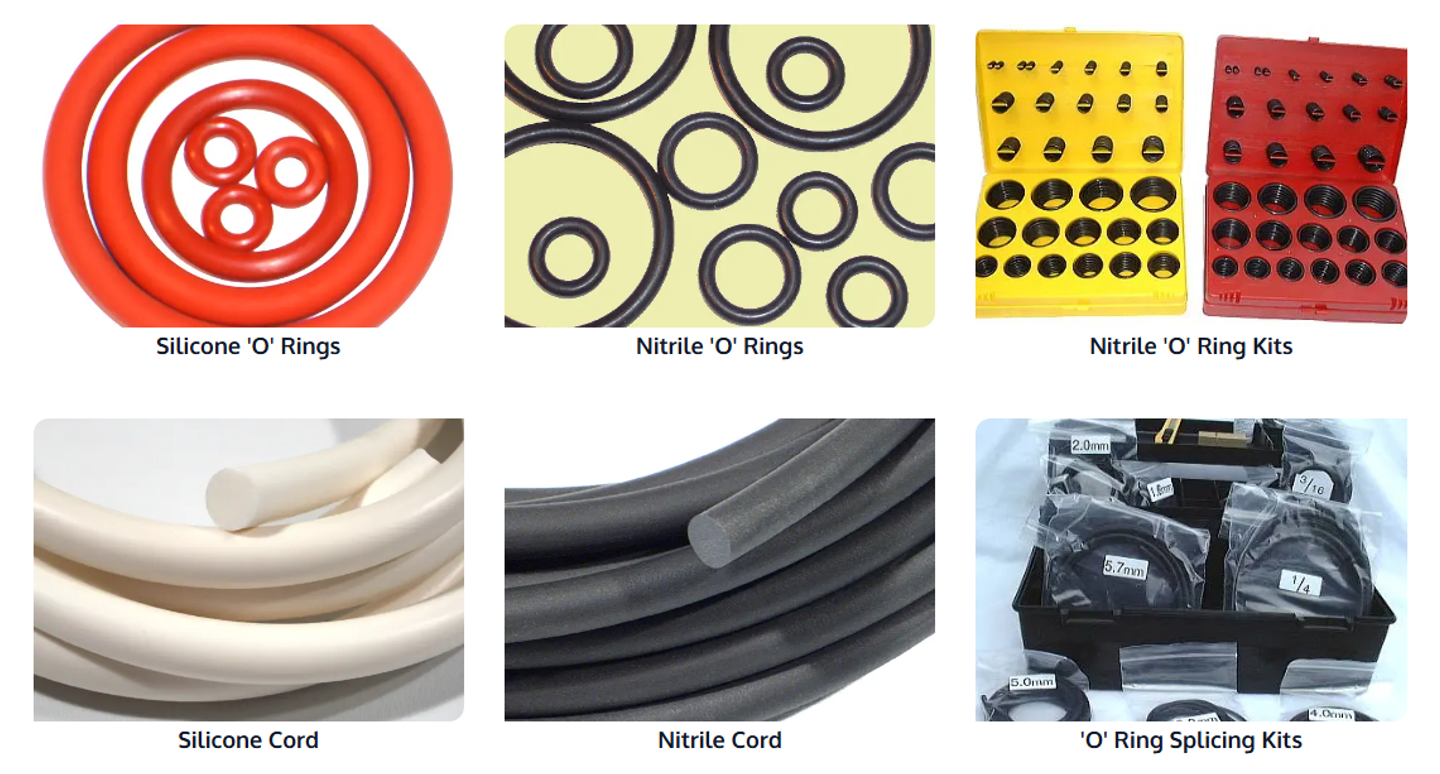
An O-ring is a round, donut-shaped (torus) seal, typically made from an elastomer such as rubber, silicone, or fluorocarbon. It’s designed to be seated in a groove and compressed between two or more parts, creating a tight seal that prevents the passage of liquids or gases.
Despite their simplicity, O-rings play a crucial role in industries ranging from aerospace to plumbing. Whether it’s sealing hydraulic valves in an aircraft, preventing oil leaks in an automobile, or keeping water inside your kitchen faucet, O-rings are everywhere.
How O-Rings Work
O-rings function on a simple principle: compression creates a seal. When the O-ring is squeezed between two surfaces, it fills the small gaps that might otherwise allow fluids or gases to escape. As pressure builds inside a system, the O-ring deforms slightly, strengthening the seal even more.
The effectiveness of an O-ring depends on:
- Material selection: Different environments require different elastomers. For example, nitrile rubber (NBR) is excellent for oil resistance, while Viton® handles high temperatures and chemicals.
- Proper sizing: O-rings come in standard sizes (like AS568 for U.S. systems or ISO 3601 internationally) to ensure a precise fit.
- Correct installation: Overstretching or twisting can lead to leaks or premature failure.
Materials Matter
Choosing the right O-ring material is key to performance. Here are some common types:
1. Nitrile (NBR)
Key Properties: Good oil and fuel resistance
Typical Applications: Automotive, hydraulic systems
2. EPDM
Key Properties: Excellent weather and water resistance
Typical Applications: Plumbing, outdoor equipment
3. Viton® (FKM)
Key Properties: High chemical and heat resistance
Typical Applications: Aerospace, chemical processing
4. Silicone
Key Properties: Flexible at low and high temperatures
Typical Applications: Medical, food processing
5. PTFE (Teflon®)
Key Properties: Low friction, non-reactive
Typical Applications: Harsh chemical environments
Common Causes of O-Ring Failure
Even though O-rings are durable, they can fail due to improper use or harsh conditions. Common causes include:
- Compression set (loss of elasticity over time)
- Chemical degradation
- Thermal damage
- Extrusion or nibbling (material forced into gaps)
- Incorrect installation
Preventing these issues often comes down to choosing the right material, ensuring proper lubrication, and following installation best practices.
Why O-Rings Are So Popular
- Cost-effective: Inexpensive to produce and replace.
- Reliable: With the right material, O-rings can last for years under demanding conditions.
- Versatile: Used in static and dynamic applications across virtually every industry.
- Easy to install: Their simple design makes them quick to fit and replace.
The Bottom Line
The O-ring might be small, but its impact is massive. From sealing jet engines to keeping your garden hose from leaking, O-rings are an essential part of modern life. Their simplicity, reliability, and versatility make them one of the most widely used sealing solutions in the world.
Next time you turn on a tap, start your car, or fly on an airplane, remember — somewhere, an O-ring is hard at work keeping everything sealed and safe.