pla vs petg 3d printer filament which material is right for your project
PLA vs PETG 3D Printer Filament: Which Material Is Right for Your Project?
Published: 17 September 2026
Read Time: 6.105 mins
Choosing the right 3D printer filament can make a significant difference to the quality, strength and performance of your finished print. While there are many 3D printing materials available, PLA and PETG filament remain two of the most popular choices for hobbyists, educators, designers, engineers and manufacturers.
At Altec Extrusions Ltd, we have been producing 3D printer filament in-house for over 10 years, specialising in PLA and PETG. Our filament is available in both 1.75mm and 2.85mm diameters, with a consistent manufacturing tolerance of ±0.03mm.
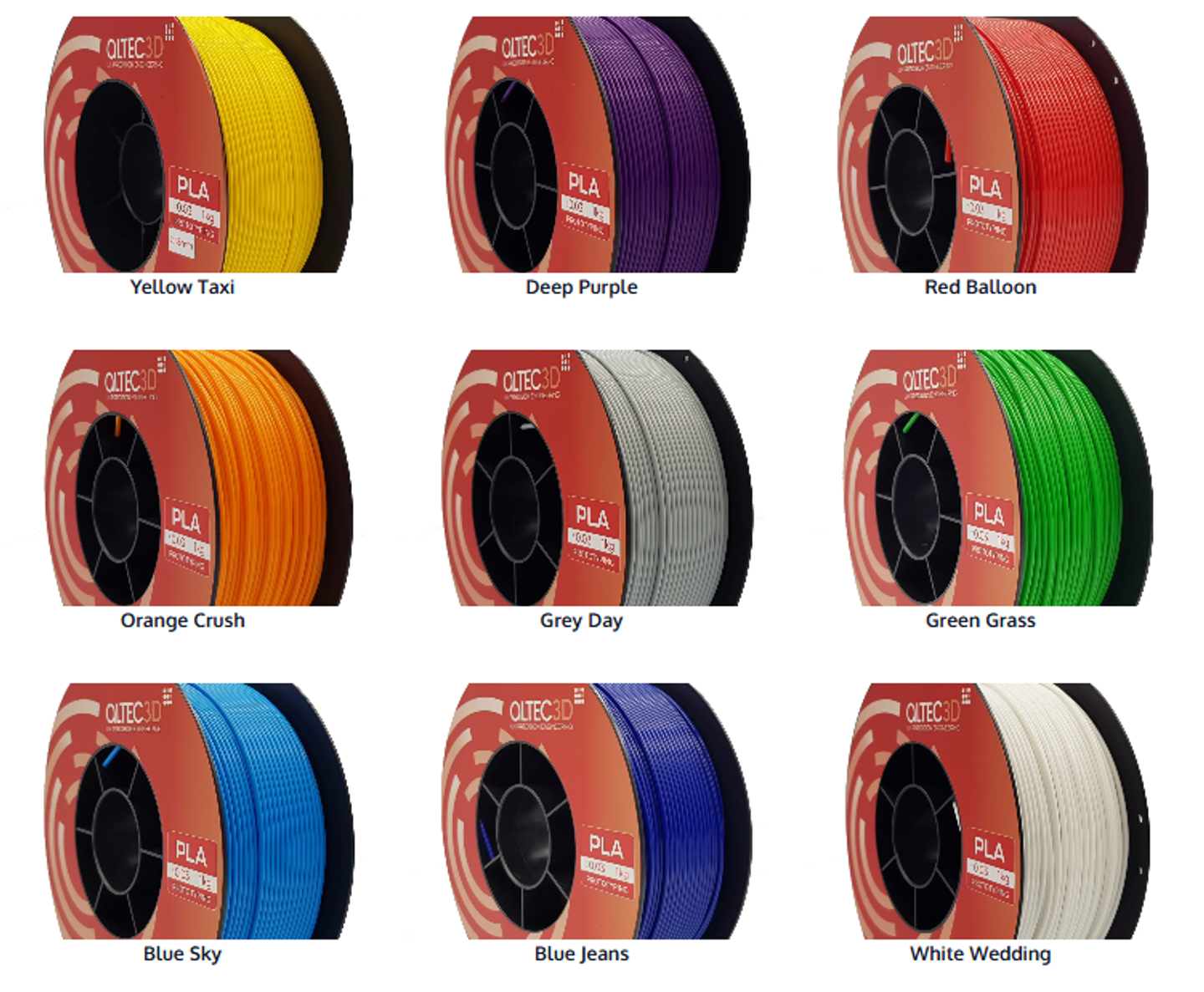
With a wide selection of colours and sizes available, including our Special FX range, we manufacture 3D printing filament designed to deliver reliable and consistent results.
In this guide, we'll look at the differences between PLA and PETG filament, their benefits and applications, and how to choose the right material for your next 3D printing project.
What Is PLA 3D Printer Filament?
PLA (Polylactic Acid) is one of the most widely used materials for 3D printing. It is a thermoplastic made from renewable resources such as corn starch, sugarcane and other plant-based materials.
PLA filament is particularly popular because it is easy to print with, produces an excellent surface finish and offers good dimensional stability. Its relatively low printing temperature and minimal warping make it a popular choice for both beginners and experienced 3D printing users.
Benefits of PLA Filament
Easy to print
PLA is known for its excellent printability. It generally adheres well to print beds and has relatively low shrinkage, helping to reduce the risk of failed or distorted prints.
Excellent surface finish
PLA can produce smooth surfaces, crisp edges and fine details, making it particularly suitable for models, prototypes and decorative prints.
Low warping
Compared with many other 3D printing materials, PLA has low shrinkage and warping characteristics. This makes it a good option for larger or more detailed prints.
Renewable raw materials
PLA is produced from renewable plant-based feedstocks. While PLA should not be considered home-compostable in typical conditions, its renewable origins make it an increasingly popular material for applications where material choice and sustainability are considerations.
Wide range of colours
PLA filament is available in a broad selection of colours and finishes. At Altec Extrusions, our range also includes Special FX colours and effects, giving users more options for creative and visually distinctive prints.
Common Applications for PLA Filament
PLA is commonly used for:
- 3D printed prototypes
- Concept and presentation models
- Educational projects
- Architectural models
- Figurines and models
- Toys and decorative items
- Custom gifts
- Product development
- Display components
- General-purpose 3D printing
What Is PETG 3D Printer Filament?
PETG (Polyethylene Terephthalate Glycol-Modified) is a durable thermoplastic that offers a useful combination of printability, strength and durability.
PETG is often selected when a printed component needs to withstand greater mechanical stress or impact than a typical PLA print. It also offers good chemical and moisture resistance, making it suitable for a wide range of functional applications.
The addition of glycol helps reduce brittleness and improves the material's processing characteristics compared with standard PET.
Benefits of PETG Filament
High strength
PETG produces strong, durable parts that can withstand mechanical loads, making it suitable for functional components and prototypes.
Excellent impact resistance
PETG is generally less brittle than PLA and can absorb impacts more effectively, making it a good choice for parts that may experience knocks or repeated use.
Good chemical resistance
PETG offers resistance to a range of substances, including many:
- Oils
- Greases
- Alcohols
- Cleaning agents
- Mild acids
- Water-based chemicals
The exact resistance will depend on the specific chemical, concentration, temperature and exposure time.
Moisture resistance
PETG has relatively low moisture absorption compared with some other 3D printing materials, making it useful for applications where exposure to moisture is a consideration.
Better heat resistance than PLA
PETG generally performs at higher temperatures than PLA, making it a better option for applications where the finished part may be exposed to moderate heat.
Strong layer adhesion
PETG can provide excellent bonding between printed layers, helping to create strong and reliable functional components.
Common Applications for PETG Filament
PETG is commonly used for:
- Functional prototypes
- Mechanical components
- Machine guards
- Storage containers
- Tool holders
- Protective covers
- Outdoor components
- Water-resistant applications
- Automotive accessories
- Electrical enclosures
PLA vs PETG: What Is the Difference?
Although both PLA and PETG are popular 3D printer filaments, they have different characteristics that make them suitable for different applications.
Print difficulty: PLA is generally very easy to print, while PETG can require slightly more adjustment and fine-tuning.
Strength: PLA offers good strength for general-purpose printing, while PETG provides excellent strength for more functional applications.
Flexibility: PLA is relatively rigid, whereas PETG offers a moderate degree of flexibility.
Impact resistance: PLA can be more brittle and has fair impact resistance. PETG is more resistant to impacts and is less likely to crack or break.
Heat resistance: PLA has moderate heat resistance, while PETG generally performs better at higher temperatures.
Warping: PLA has very low warping, while PETG also has relatively low warping when printed correctly.
Surface finish: PLA produces an excellent surface finish with crisp detail. PETG produces a smooth finish that can have a slightly glossier appearance.
Chemical resistance: PLA has limited chemical resistance, while PETG offers good resistance to a range of chemicals.
Moisture resistance: PETG generally offers better moisture resistance than PLA, making it more suitable for applications where exposure to moisture is a consideration.
Outdoor durability: PLA has limited outdoor durability, while PETG is generally better suited to outdoor applications.
Renewable feedstock: PLA is made using renewable plant-based feedstocks, while PETG is not.
Should You Choose PLA or PETG?
The best 3D printer filament depends on what you are trying to produce and the conditions your finished print will need to withstand.
Choose PLA if you need:
- Easy and reliable printing
- Excellent surface quality
- Fine detail
- Low warping
- Concept models
- Decorative objects
- Educational projects
- Visual prototypes
- A wide choice of colours and finishes
PLA is a great all-round option when ease of printing, appearance and detail are the main priorities.
Choose PETG if you need:
- Strong functional parts
- Greater impact resistance
- Better moisture resistance
- Improved chemical resistance
- Greater durability
- Components exposed to mechanical stress
- Parts intended for more demanding environments
PETG is a strong choice when the performance and durability of the finished component are more important than achieving the easiest possible print.
1.75mm vs 2.85mm 3D Printer Filament
3D printer filament is commonly available in 1.75mm and 2.85mm diameters. The correct size depends on the specifications of your 3D printer and its extruder system.
Using the correct filament diameter is important for consistent extrusion and reliable print performance. Always check your printer manufacturer's specifications before purchasing filament.
At Altec Extrusions, we produce both 1.75mm and 2.85mm PLA and PETG filament, manufactured to a consistent ±0.03mm tolerance.
Why Choose Altec Extrusions for 3D Printer Filament?
At Altec Extrusions Ltd, we have been producing 3D printer filament in-house for over a decade.
Our experience in extrusion manufacturing allows us to focus on consistency, quality and reliable filament production. We manufacture both PLA and PETG filament in 1.75mm and 2.85mm sizes, with a tolerance of ±0.03mm.
We also offer a wide selection of colours, including our Special FX range, helping customers find the right filament for both functional and creative 3D printing applications.
Whether you're producing prototypes, models, components or creative projects, choosing a consistent, reliable filament is an important part of achieving good print results.
Find the Right 3D Printer Filament for Your Project
PLA and PETG are both versatile 3D printing filaments, but each has its own strengths.
PLA is an excellent choice for easy printing, detailed models, prototypes and applications where appearance is important.
PETG is better suited to functional parts where strength, impact resistance, moisture resistance and durability are key considerations.
Understanding the differences between PLA and PETG can help you select the right material for your 3D printer and achieve more reliable results.
Explore the Altec Extrusions range of 1.75mm and 2.85mm 3D printer filament, available in a wide selection of colours and finishes.